The System Isn’t Broken, It’s Working Exactly As Designed
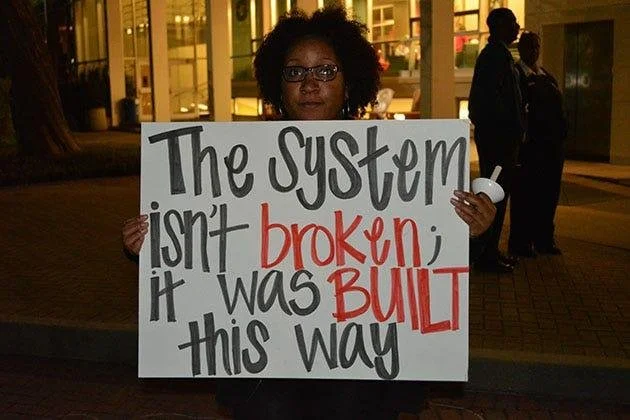
“Here’s the thing that you might not want to hear: we need to stop just blaming people.”
What happened in Louisiana is not a glitch. It’s not an accident. It’s not the result of one bad decision or one bad leader. It is the predictable outcome of a system built to produce exactly this kind of harm.
And while Wisconsin isn’t directly impacted, we aren’t exempt.
Wisconsin is not different.
Wisconsin is not safe from the same patterns of hate and harm. But we can disrupt those patterns. We can make them backfire. Invest a couple of minutes for this - it’s worth it, and we all need to be on the same page:
The Supreme Court didn’t just happen upon this decision; it was a calculated, well-planned step to destroy all the work of the Civil Rights Movement. And it’s not isolated. What we’re watching in Louisiana, and across the country, is connected to what we’re living through in Wisconsin. Rigged maps aren’t new here, or anywhere else.
But here’s the thing that you might not want to hear: we need to stop just blaming people. While there are certainly folks who want to suppress the votes of Black and Brown people, the system has allowed them to do so. A system that was thought to be fair has never been fair for all of us—only a select few.
If anything, we need to acknowledge that this is a preview of what happens when we refuse to confront the systems shaping our lives.
Blame is a distraction; systems are the truth.
Years ago, I earned a Lean Six Sigma Green Belt. I don’t remember the formulas, but I remember the most important lesson: You don’t just blame the person. You must also examine the system that failed and revise, reform or dismantle it.
When something keeps breaking, you don’t yell at the worker. You examine the system that produced the failure. You find the waste, the gap, the bottleneck, the harm, and you fix that. If it can’t be fixed, then you create something new.
Blame gives us the illusion of accountability without any of the actual work.
Blame keeps us busy while nothing changes.
Blame is the enemy of progress.
Because blaming people never works.
Blame doesn’t create accountability.
Blame doesn’t build power.
Blame doesn’t change outcomes.
Louisiana is not an accident; it’s a system functioning as intended to take us back 60 years. Whether we’re talking about a policy decision, a crisis response, or a moment of state-sanctioned harm, the question we keep asking is “Who did that?” The question we should be asking is “What system produced this outcome?” or “What historical patterns made this possible and predictable?”
It sounds cliché, but we can’t build with the tools of our oppressors. We can’t reform our way into freedom.
People are responding to the systems they’re in. Systems that reward harm.Systems that under-resource care.Systems that punish struggle.Systems that leave entire communities to fend for themselves.
And if we’re honest, Wisconsin has always been a place of disparities with gerrymandering, constant targeting of Milwaukee, and being a state littered with Sundown towns that still operate by the same rules as 1955.
I digress, because this is not the time to complain just to complain. This is the time to fight.
If we want different outcomes, we need different structures. If we want safety, we need investment in care. If we want thriving communities, we need to build them intentionally, consistently, and together.
And here’s the good news: we can do it! We have done it every time they come for us. Make no mistake, they are coming for us, all of us.
What happened in Louisiana is a warning and a mirror. Wisconsin has a choice: keep blaming people or start replacing harmful systems.
I know which path we’re on. And I know we’re not doing it alone.
So what do we do? Here are some clear, concrete, and urgent next steps.
Name the system, not the symptom. Stop centering individuals and start naming the structures: underinvestment, disinformation, racialized policy choices, austerity, and the erosion of public goods.
Demand transparency and follow the money. Ask your elected officials where the “surplus” went, why infrastructure is crumbling, why youth programming is shrinking, and why care systems are the first cut and the last restored.
Shift the narrative from punishment to prevention. We cannot police our way out of systemic failure. We cannot shame our way into community safety. We cannot punish our way into thriving.
Loudly and unapologetically push back on any system that isn’t built with care. Emergency response, mental health, youth development, education and climate resilience. These are not “extras.” They are the foundation of a functioning society.
Get in formation! This is where All In Wisconsin comes in. We are aligning narrative, organizing, and resilience infrastructure across the state.
We can keep blaming the weather, politicians, and each other. Or we can confront the root causes and build something better.
Because until we do, every year our basements will flood, our streets will crumble, our kids will seek destructive attention, and our communities will inch closer to becoming ghost towns.
But that is not our destiny. Not if we choose differently.Not if we act boldly.Not if we build systems of care.
And we are.
We’re doing it.
Together.